There is a warmth that only a vintage dining room can offer — the creak of an antique wooden chair, the soft glow of a crystal chandelier, the faded floral pattern on a set of china passed down through generations. You’ll love how a vintage dining room feels both familiar and special, a space where family recipes taste better and conversations linger longer. Picture a table dressed in lace, a sideboard displaying silver heirlooms, and walls adorned with portraits that seem to watch over every holiday gathering.
From farmhouse tables with mismatched chairs to elegant rooms with muted green walls and cane-backed seating, these vintage dining room inspirations celebrate the beauty of age and the artistry of the past. Let’s wander through dining rooms that whisper stories — each one proof that the most beautiful rooms are those that have lived a little.
1. Crystal & Cream – A Chandelier Above Upholstered Chairs
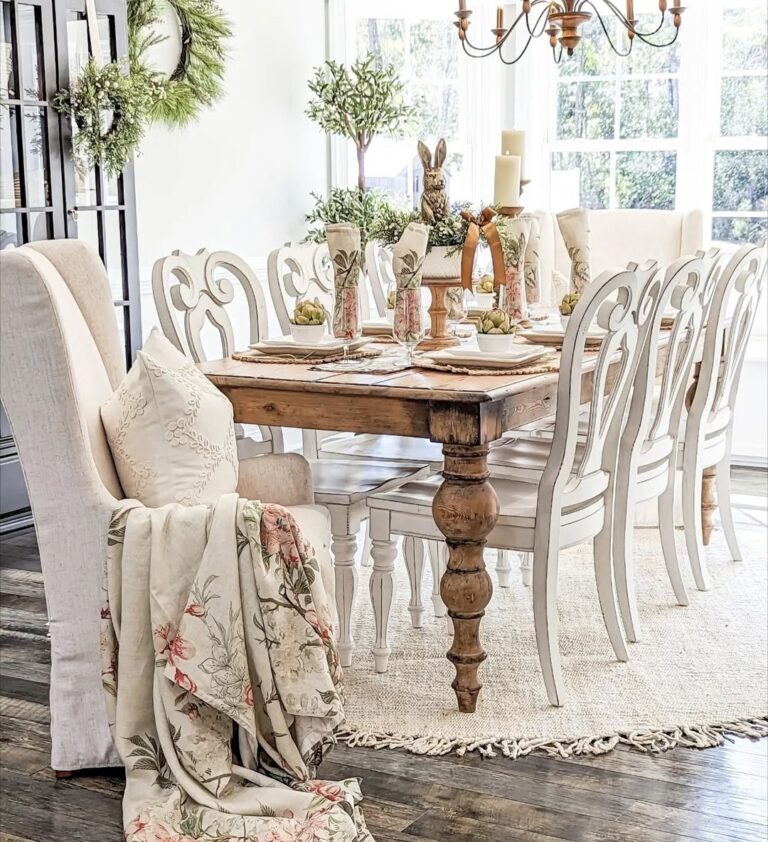
Unfurl this elegant vintage dining room: a crystal chandelier suspended above a table surrounded by white upholstered chairs. This vintage dining room style is soft and inviting, the chairs’ fabric likely a faded velvet or linen. You’ll love how the chandelier’s light dances off the table’s polished wood.
In a vintage dining room, a chandelier is often the star. Look for one with curved arms, crystal drops, or candle-style bulbs. Even a reproduction can feel authentic if the proportions are right and the finish has a slightly aged patina.
2. Farmhouse Light – Table and Chairs Before a Window
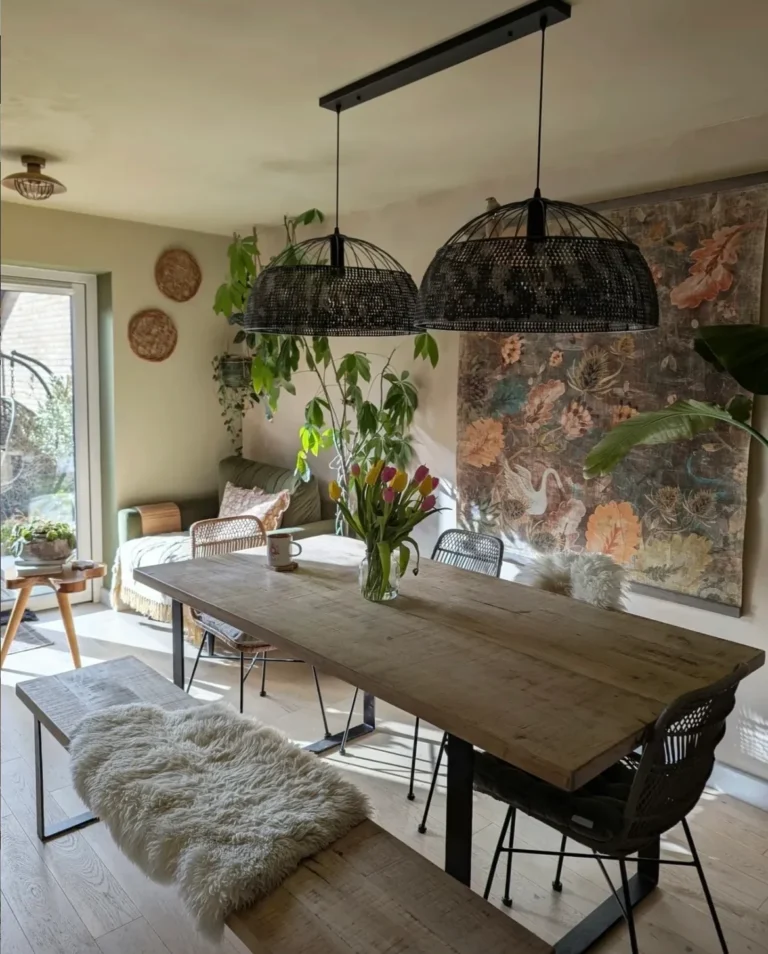
Notice the natural light pouring through a window onto a farmhouse table and chairs. This vintage dining room feels rustic and real, the kind of space where you’d serve a Sunday roast. You’ll appreciate how the window makes the room feel connected to the outdoors.
A farmhouse table is a classic centerpiece for a vintage dining room. Look for one with a distressed finish, turned legs, and signs of wear. Pair it with a mix of chair styles — some Windsor, some ladder-back — for an authentic collected look.
3. Rustic Crystal – A Chandelier Over a Well-Worn Table
See the contrast — a rustic wooden table and chairs beneath a sparkling chandelier. This vintage dining room mixes rough and refined, the informality of the wood balanced by the elegance of the light. You’ll love how the chandelier elevates the humble table.
Don’t be afraid to mix styles in a vintage dining room. A chandelier that’s too grand for a shabby table creates wonderful tension. The key is to ensure both pieces share a common era or material — both have wrought iron, both have wood tones, etc.
4. Ready to Dine – A Table Set for a Meal
See the place settings — china, silverware, and glassware arranged on a vintage tablecloth. This vintage dining room is ready for guests, every detail considered. You’ll appreciate how the table setting is as much decor as it is function.
In a vintage dining room, the tablecloth matters. Look for lace, embroidered linen, or a subtle floral pattern. Use chargers under the plates and cloth napkins in vintage rings. The table should feel like it’s dressed for company.
5. Inspiration Compilation – 20 Vintage Ideas in One Place
Study this idea board — twenty vintage dining room inspirations, from shabby chic to Hollywood Regency. You’ll love how the collection shows the range of vintage style, proving it can be rustic, glamorous, or something in between.
Create your own vintage dining room inspiration board before you buy anything. Look for patterns in the images that appeal to you — wood tones, chair styles, lighting types. The common elements will guide your choices.
6. Intimate Setting – Four Chairs Around a Small Table
Notice the intimacy — a table with just four chairs, a chandelier hanging low above. This vintage dining room is for close family or small dinner parties, the scale feeling personal and warm. You’ll love how the smaller table encourages conversation.
For a vintage dining room in a small space, a 48-inch round table with four chairs is perfect. It fits in corners, allows easy movement, and feels cozy rather than cramped. Look for a table with a pedestal base so legs don’t get in the way.
7. Floral Centerpiece – White Flowers on a Wood Table
Let the white flowers shine — a simple vase of white blooms on a dark wooden table. This vintage dining room keeps the table uncluttered, the flowers providing the only color. You’ll appreciate how the white contrasts with the wood’s rich patina.
Fresh flowers are essential in a vintage dining room. White hydrangeas, peonies, or roses feel timeless. Use a crystal vase or an antique pitcher. The arrangement should be low enough to see over during conversation.
8. Another Set Table – Ready for Dinner
See the repetition — another vintage dining room table set with care. The repetition of place settings across pins tells you this is a signature of the style. You’ll love how the table becomes a still life, beautiful even when empty.
Even when not in use, keep your vintage dining room table minimally set. A runner, a vase, and a few candles are enough. The room should feel ready for a meal at any moment, but not cluttered.
9. Gallery Wall – Pictures Hung Above the Sideboard
Look at the wall — a collection of framed pictures hanging above a sideboard, adding personality to the vintage dining room. The frames are likely mismatched but unified by gold or dark wood. You’ll appreciate how the art fills the wall without overwhelming the table.
A gallery wall in a vintage dining room should feel curated over time. Mix family photos with botanical prints, antique maps, or still lifes. Use frames in similar eras — all Victorian, all mid-century — for cohesion.
10. Vases & Blooms – Floral Arrangements on the Table
Notice the vases — a cluster of them on the table, each holding a different flower or branch. This vintage dining room celebrates abundance, the table a garden of glass and petals. You’ll love how the vases catch the light from the chandelier.
For a vintage dining room, collect a few mismatched vases in milk glass, crystal, or ceramic. Group them in the center of the table, varying heights and shapes. Fill with seasonal flowers or dried branches.
11. Potted Greenery – A Plant on the Table
See the single potted plant — a small fern or ivy on the table, bringing life to the vintage dining room. The plant is simple, its terra cotta pot echoing the room’s earthy tones. You’ll appreciate how the green softens the formality.
Don’t overlook plants in a vintage dining room. A small potted herb or a trailing ivy on the sideboard adds life and color. Use vintage planters — a brass cachepot, a ceramic bowl — to keep the look period-appropriate.
12. Classic Trio – Table, Chairs, Chandelier
Observe the classic combination — table, chairs, and chandelier, the core of any vintage dining room. The table is likely dark wood, the chairs cane-backed or upholstered, the chandelier dripping with crystals. You’ll love how this trio never goes out of style.
If you’re building a vintage dining room from scratch, start with these three pieces. Buy the best vintage or reproduction you can afford. A cheap table will undermine the entire room; a great one anchors it.
13. Set with Silver – A Table Laid for a Formal Meal
Notice the silverware — polished and arranged correctly, a sign of a formal vintage dining room. The place settings are symmetrical, the glasses sparkling. You’ll appreciate how the silver adds a layer of tradition and ceremony.
Real silver or silver-plated flatware is a hallmark of a vintage dining room. Look for patterns from the 1940s or earlier at estate sales. Use them daily — silver is meant to be used, not stored. The wear adds to the vintage feel.
14. Centerpiece Bowl – A Floral Arrangement at the Table’s Heart
See the bowl of flowers — a low, wide bowl filled with blooms, sitting at the exact center of the table. This vintage dining room centerpiece is classic and unfussy, the flowers spilling over the rim. You’ll love how the arrangement doesn’t block sightlines.
For a vintage dining room centerpiece, choose a shallow bowl or a pedestal compote. Fill it with seasonal flowers, fruit, or even collected pinecones. Keep it low (under 12 inches) so diners can see each other.
15. Ready & Waiting – A Clean, Prepared Dining Room
Step into this clean room — a vintage dining room with no clutter, just the table set and waiting. The chairs are pushed in, the sideboard dusted, the light soft. You’ll appreciate how the stillness feels like an invitation.
In a vintage dining room, less is often more. Keep the sideboard clear except for a lamp and a few decorative objects. Store extra dishes in cabinets. The room should feel ready for a meal at any moment, not like a storage area.
16. Vase Duo – Two Vases on the Table
Notice the pair of vases — one on each side of the table, or both in the center, creating symmetry. This vintage dining room uses repetition to create calm. You’ll love how the matching vases anchor the table’s length.
Symmetry is a powerful tool in a vintage dining room. Place matching candlesticks, vases, or lamps on the sideboard or table. The repetition is pleasing to the eye and echoes the formal dining traditions of the past.
17. Art on the Wall – Pictures Hung Above the Table
Look at the wall art — pictures hung directly above the dining table, adding visual interest at eye level. This vintage dining room uses art to fill the space above the table, drawing the eye up. You’ll appreciate how the art adds color and conversation.
When hanging art above a dining table, leave 6-12 inches between the top of the centerpiece and the bottom of the frame. The art should be large enough to be seen easily. A single large painting or a triptych works well.
18. Another Gallery – More Art on the Wall
See the pattern — another vintage dining room with pictures on the wall. The repetition of this design choice across pins tells you art is essential in a vintage space. You’ll love how the frames, even mismatched, tell a story.
Art in a vintage dining room should feel collected over time. Look for original oil paintings from estate sales, vintage botanical prints, or framed needlework. The subjects can be varied, but the frames should have a common material (all wood, all gold).
19. Center Stage – Flowers at the Table’s Heart
Notice the centered arrangement — a large floral display in the middle of the table, the chairs pulled back to show it off. This vintage dining room makes the flowers the focal point, the rest of the room receding. You’ll love how the blooms seem to float above the table.
For a dramatic centerpiece in a vintage dining room, use a large footed bowl or a tarnished silver urn. Fill it with seasonal flowers in a single color or a harmonious palette. The arrangement should be lush and slightly asymmetrical.
20. Chandelier Focus – The Light as Anchor
Observe the chandelier — the clear anchor of this vintage dining room. The table and chairs are positioned directly beneath it, the light illuminating the entire setting. You’ll appreciate how the chandelier’s style dictates the room’s mood.
Choose your chandelier before any other piece in a vintage dining room. It will determine the era and formality of the space. A crystal chandelier calls for elegant chairs; a wrought-iron one suits a farmhouse table.
21. Moody Green – A Vintage Room with European Flair
Step into this moody room — muted green walls, a vintage chandelier, and a table set for a formal meal. This vintage dining room feels European and old-world, the green adding depth and drama. You’ll love how the dark walls make the chandelier’s light feel warmer.
Deep, muted colors work beautifully in a vintage dining room. Consider sage green, dusty blue, or burgundy. Paint the walls, the trim, or even the ceiling. The dark tones absorb light, making the room feel intimate and cozy.
22. Formal & Traditional – A Table Set for a Feast
See the formal place settings — chargers, multiple forks, and a folded napkin at each seat. This vintage dining room is ready for a multi-course meal. You’ll appreciate the attention to detail, the table itself a work of art.
Even if you never host formal dinners, learn the proper place setting for a vintage dining room. It’s a skill worth having, and the arrangement is beautiful. Forks on the left, knives and spoons on the right, glasses above the knives.
23. Round & Green – Cane Chairs Around a Pedestal Table
Notice the round table — a pedestal base, surrounded by green chairs with cane backs. This vintage dining room is French country or colonial in feel, the cane adding texture and breathability. You’ll love how the round shape encourages easy conversation.
Cane-backed chairs are a classic in vintage dining room design. They’re lightweight, visually airy, and period-appropriate for many eras. Pair them with a solid wood table to balance the transparency of the cane.
24. French Blue – A Colonial-Inspired Vintage Room
Admire this modern colonial room — French blue and cream paneled walls, oak cane chairs, and fresh flowers on the table. This vintage dining room feels both historical and fresh, the blue a cheerful counterpoint to the dark wood. You’ll appreciate how the flowers echo the blue in the walls.
Paneled walls or wainscoting add instant vintage character. Paint them in a period-appropriate color — blue, cream, sage — and pair with simple window treatments. The architecture itself becomes the decoration.
25. Antique Anchor – A Truly Old Wooden Table
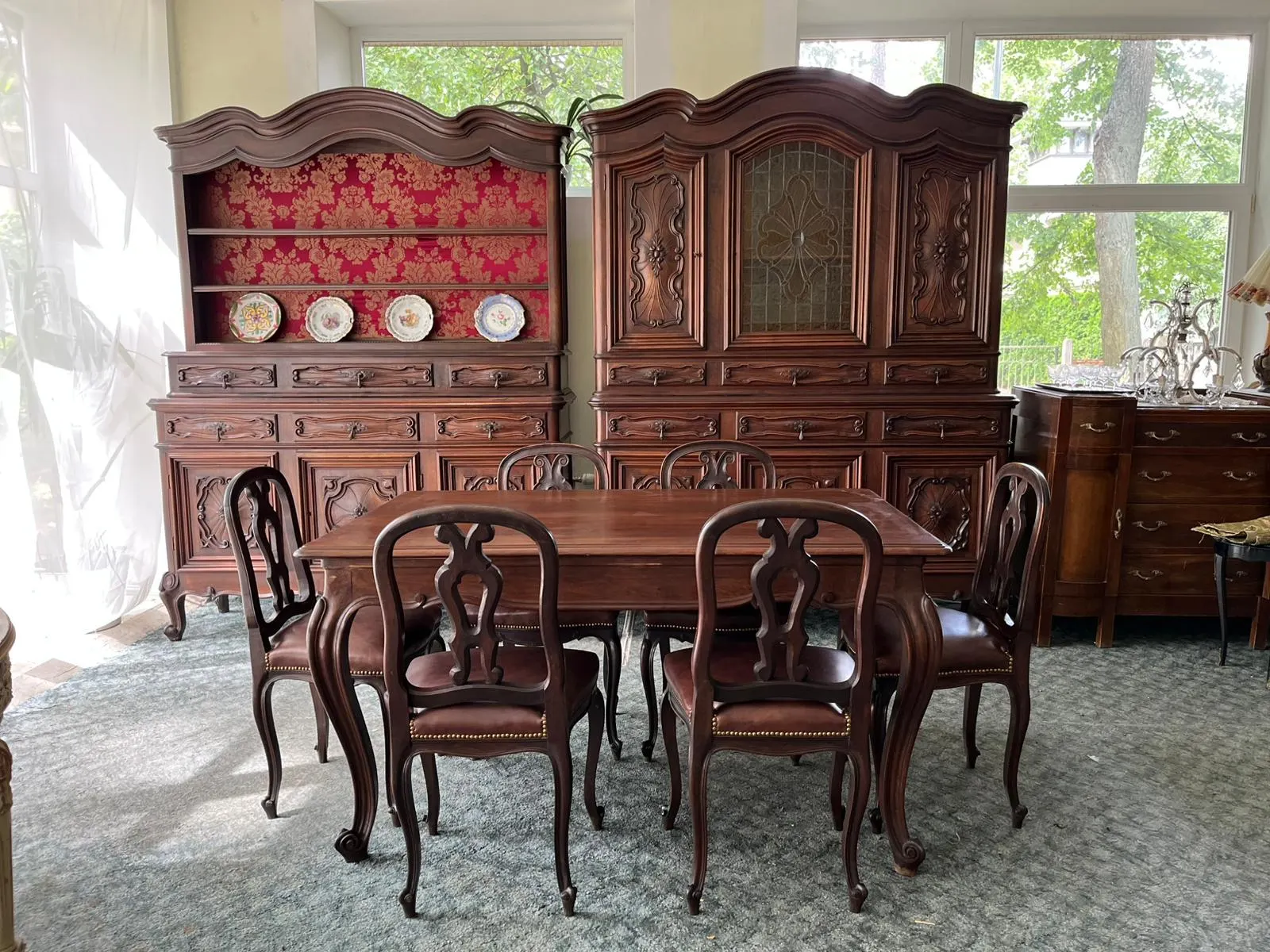
Study this antique table — a genuine vintage piece with a rich patina, scratches, and a history you can almost feel. This vintage dining room is built around a true heirloom, the rest of the room deferring to its age. You’ll love how the table’s imperfections are its beauty.
The best vintage dining room often starts with a single authentic piece. Hunt at estate sales, auctions, or antique shops for a table that speaks to you. Don’t refinish it — let the wear and tear show. A real antique has a soul that a reproduction can’t match.
🕰️ Heirloom Compass: 6 Fresh Blueprints for a Vintage Dining Room
- 🪑 The Mismatched Chair Strategy: In a vintage dining room, chairs don’t have to match perfectly. Collect four to eight chairs from different eras — a Windsor here, a cane-back there, a velvet upholstered one for the head of the table. The common element should be scale (all similar seat height) and wood tone (all dark, all light). This collected look is more authentic than a matching set.
- 💡 The Patina Priority: In vintage dining room decor, new furniture should look old, and old furniture should look older. Avoid high-gloss finishes; choose matte, waxed, or distressed surfaces. If you buy a reproduction, consider “aging” it with a light sanding and a dark wax. The goal is a room that feels like it’s been assembled over decades, not a weekend.
- 🖼️ The Gallery Wall Rule: For a vintage dining room gallery wall, hang art at staggered heights, but keep the overall shape rectangular. Use frames in similar materials (all wood or all gold) but varied sizes. Include at least one portrait, one landscape, and one botanical print. The wall should feel like a family’s collection, not a hotel’s.
- 🧺 The Textile Layer: In a vintage dining room, use layers of fabric: a lace or linen tablecloth, cloth napkins, a runner, and perhaps a velvet or chenille table pad under the cloth. The textures add warmth and authenticity. Look for vintage or vintage-style fabrics at flea markets. A slight stain or fade adds character.
- 🕯️ The Candle Clusters: Group candles in odd numbers — threes and fives — on the table, sideboard, or mantel. In a vintage dining room, candles provide the primary evening light. Use real wax, not battery-operated. The flickering flames will make the silverware gleam and the wood glow. Always use dripless candles on tablecloths.
- 📅 The Seasonal Rotation: A vintage dining room should change with the calendar. Use a floral tablecloth in spring, a plaid runner in autumn, a red centerpiece in winter. Swap art or switch out vases. The room should feel alive and responsive to the seasons, not frozen in time.
Frequently Asked Questions
Q: How can I create a vintage dining room on a budget?
Ans: Start with a thrifted or flea market table — solid wood, even if it’s scratched. Sand and wax it, don’t refinish it completely. Collect mismatched chairs over time, starting with just two good ones and adding as you find them. Use a vintage tablecloth to hide less-than-perfect surfaces. Hang a simple chandelier from a home improvement store — you can always upgrade later. Paint the walls a period color (sage green, cream, or pale blue). And use what you have: Grandmother’s china, a few silver spoons, a lace doily. In a vintage dining room, authenticity beats expense every time.
Q: What are the essential colors for a vintage dining room?
Ans: The best vintage dining room colors are muted and slightly faded. Think sage green, dusty blue, cream, pale yellow, and off-white. For a moodier look, use burgundy, deep olive, or charcoal. Avoid bright, saturated colors (neon pink, electric blue) and stark white. The walls should feel like they’ve seen a few decades. Two-tone schemes are period-appropriate: darker wainscoting with lighter uppers, or a colored ceiling with cream walls.
Q: Can I mix modern elements into a vintage dining room?
Ans: Yes, but carefully. In a vintage dining room, modern elements should be used as accents. A contemporary abstract painting over a Victorian sideboard. A sleek, modern chandelier over an antique farmhouse table. The contrast should feel intentional, not accidental. Limit modern pieces to one or two per room, and ensure they share a color or material with the vintage pieces. The overall feel should still be historical, just with a fresh twist.
Q: How do I care for antique dining room furniture?
Ans: In a vintage dining room, care is simple but specific. Dust weekly with a soft cloth. Use coasters and placemats to prevent water rings. Never use silicone-based polishes; they build up and dull the finish. Instead, use a beeswax or carnauba wax polish twice a year. For scratches, try a scratch cover or a mixture of vinegar and olive oil. For major damage, consult a professional. Remember: a few signs of wear add character. You’re preserving history, not creating a museum.
Q: What’s the best lighting for a vintage dining room?
Ans: In a vintage dining room, the primary light source should be a chandelier hung 30-34 inches above the table. Choose one with candle-style bulbs and a warm color temperature (2700K). Add sconces on the walls at 60-66 inches from the floor, preferably on dimmers. Use candles (real wax) on the table and sideboard for a secondary warm glow. Avoid overhead recessed lighting or cool white LEDs — they’ll make the room feel like an operating room. The light should feel like firelight, not fluorescence.
Conclusion
You’ve wandered through twenty-five vintage dining room scenes — from farmhouse tables with mismatched chairs to elegant spaces with crystal chandeliers and muted green walls. Each image shares a common soul: a love for the past, a respect for craftsmanship, and a belief that the best rooms are those that feel collected over time. A vintage dining room is not about perfection; it’s about patina. The scratches on the table, the faded flowers on the china, the slightly crooked frame — these are not flaws; they are stories. They tell of meals shared, holidays celebrated, and conversations that stretched late into the night.
Now it’s your turn to begin the collection. Start with one piece you love — an antique table, a set of silver-plated forks, a chandelier that makes you smile. Build slowly, from estate sales and flea markets and family attics. Don’t rush. A vintage dining room takes time, and that’s the point. Every new piece adds another layer of memory. Set the table, light the candles, and invite someone you love. Your room is ready to make new stories, even as it honors the old ones. 🕰️