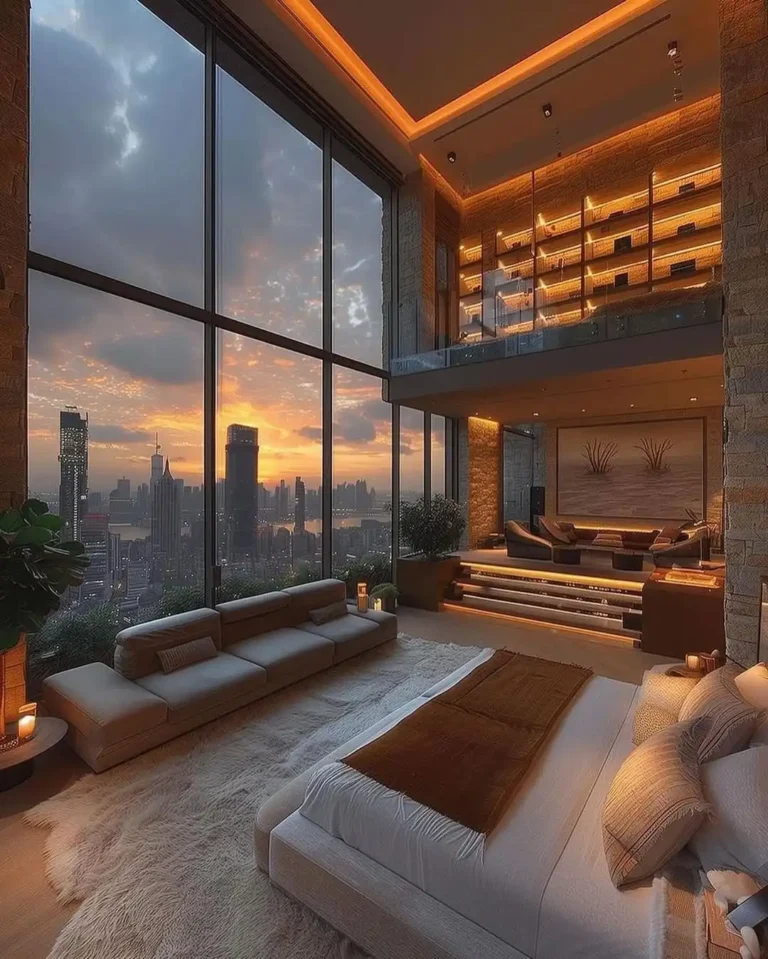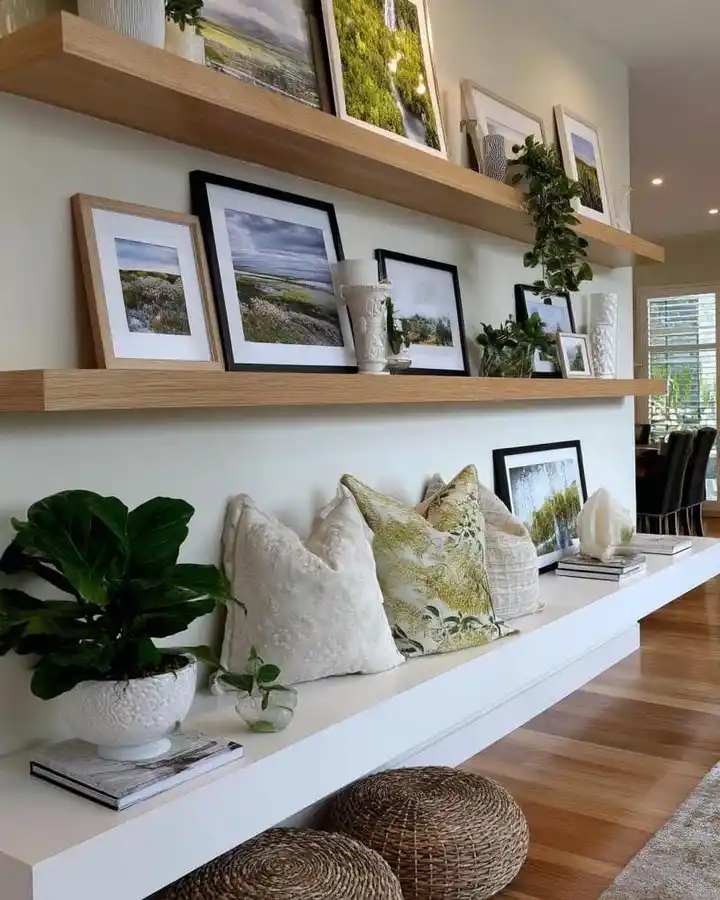
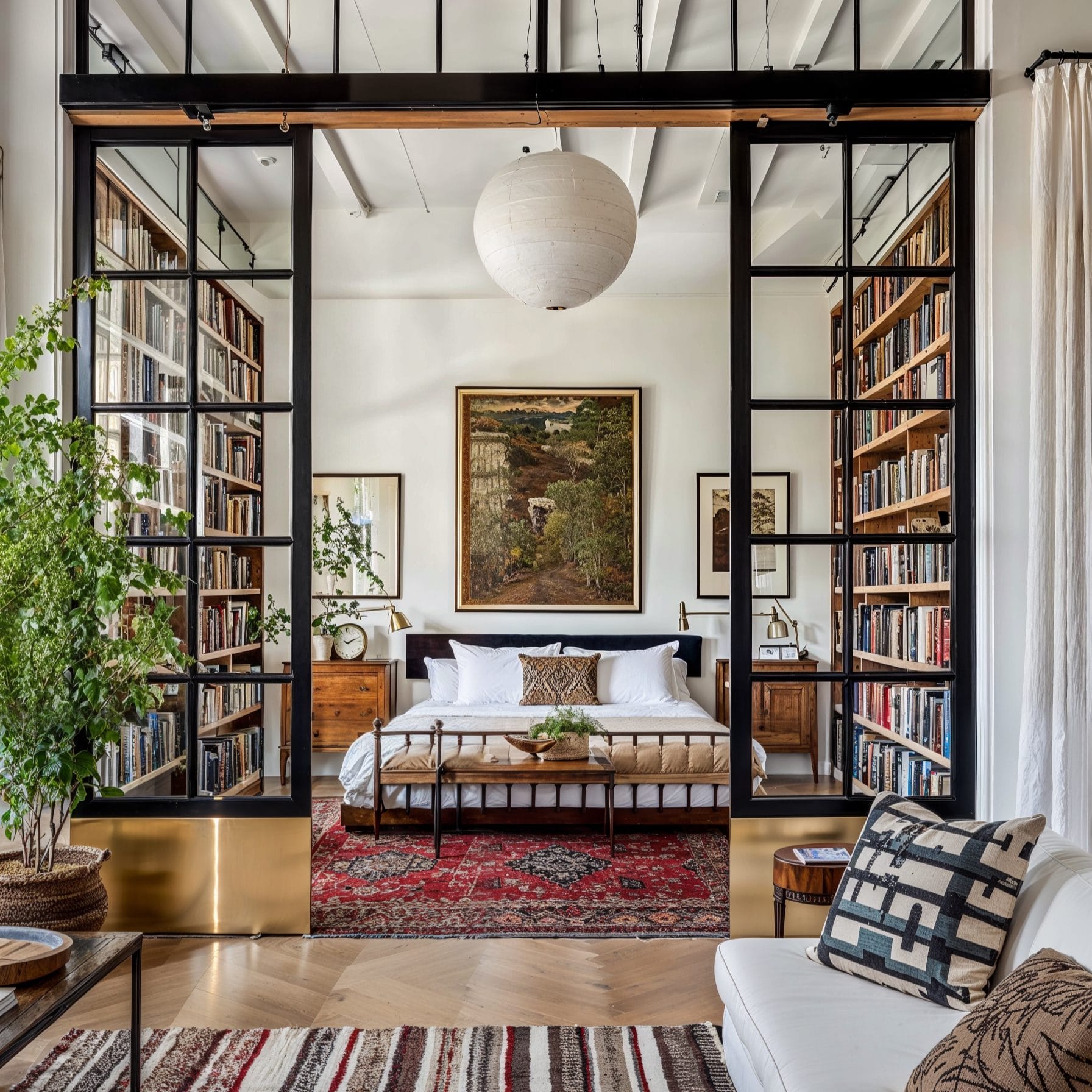
Open-concept living is beautiful — until you want a quiet reading nook, a visual break from the kitchen mess, or simply the feeling of a room within a room. Smart room divider ideas give you the best of both worlds: the airiness of an open floor plan and the cozy intimacy of separate zones. Picture a slatted wood screen that filters afternoon light like a forest canopy, a floor-to-ceiling bookshelf that stores your library while dividing your living and dining areas, or a row of tall potted plants that breathably separates the sofa from the desk.
Whether you live in a studio apartment, a loft, or a sprawling family home, these room divider ideas will inspire you to rethink your layout. You’ll discover how to use wood, glass, plants, and even furniture to carve out privacy without closing off the light. The goal isn’t walls — it’s gentle boundaries, the kind that whisper “this is your space” without shouting “keep out.”
1. Living Room Filled With Furniture & Lots of Plants – A Green Partition
Let a lush row of tall plants — fiddle-leaf figs, areca palms, or bamboo — create a living room divider. Among the most beautiful room divider ideas, this green wall breathes, grows, and softens every edge. You’ll love how the leaves filter harsh light, how the planters anchor the space, and how the greenery makes both sides of the room feel like a garden — as if a meadow has decided to run straight through your living room, parting just enough for you to pass.
For a successful plant-based room divider ideas approach, choose large pots (at least 14 inches wide) to create a visual barrier. Space them close enough that leaves overlap but far enough that you can still water and rotate them. The plants do double duty: cleaning the air and defining your zones without ever closing off a view. It’s separation that feels like abundance, not division — a thicket you can walk through, not a wall you have to open.
2. Another Living Room With Furniture & Plants – Layers of Green & Wood
Arrange a cluster of furniture and plants to naturally zone a large room. Organic room divider ideas don’t need a single screen — sometimes the sofa facing one direction and a row of tall planters behind it is enough. You’ll notice how the eye reads the change: here, living room; there, dining area. The plants are the gentle comma in the sentence of your floor plan, a pause that guides without commanding.
This approach to room divider ideas works especially well in rental spaces where you can’t install permanent fixtures. Place a long console table behind your sofa, load it with trailing pothos and a few table lamps, and suddenly you’ve created a soft wall of green and light. The room feels larger, not smaller, because you’ve added depth, not obstruction — a layered landscape, not a closed door.
3. Modern Living Room With Wood Paneling & White – Architectural Slats
Install a rotating slat wood partition that lets you adjust privacy and light by the hour. Among the most versatile room divider ideas, this architectural screen is part sculpture, part functional wall. You’ll love how the warm wood warms the white room, how the angle of the slats changes the quality of light from morning to evening, like a blind made of trees — a forest you can tune, open and closed at your whim.
For a DIY version of these room divider ideas, build a freestanding frame and attach vertical wood slats with a small gap between each (1-2 inches). Mount it on casters if you want mobility. Paint the frame white for a modern look or leave the wood natural for warmth. The slats provide privacy without blocking light entirely — the room breathes through the gaps, connected but separated, like two ponds sharing an underground stream.
4. Room Divider in the Middle of a Kitchen – Potted Plant as Partition
Set a large potted plant between your kitchen island and living area. One of the simplest room divider ideas requires only a single statement plant: a tall fiddle-leaf fig, a mature olive tree, or a bird of paradise. You’ll appreciate how the one plant does the work of a whole screen — defining the edge of the kitchen, softening the transition, and adding a living focal point that changes with the seasons, like a sentinel that also grows.
This minimal room divider ideas approach works best when the plant is large enough (at least 4-5 feet tall) and placed at the visual midpoint between zones. Use a substantial pot — ceramic or heavy terracotta — to anchor it. The plant doesn’t block sightlines completely; it just signals “here begins a different space.” A gentle nudge, not a shove, a whisper, not a shout.
5. Modern Wooden Open Shelf Divider – Store & Separate
Build or buy a low, wide open shelving unit that acts as both room divider and storage. Among the most practical room divider ideas, a shelf unit defines the space without closing it off — you can see through the shelves, but they create a clear boundary. You’ll love how you can style them with books, plants, and ceramics, turning a functional piece into a curated gallery that both sides of the room can enjoy, like a library that faces two ways.
For a DIY version of these room divider ideas, use 2×12 lumber to build a unit that’s about 4 feet tall and as wide as your space allows. Leave the back open so light passes through. Fill the shelves with a mix of closed storage (baskets) and open display (books, small plants). The low height keeps the visual connection between zones while establishing a clear physical boundary — a fence you can see over, like a hedge that’s been trimmed to just the right height.
6. Living Room With White Bookshelves – A Library Wall That Divides
Position a tall white bookshelf perpendicular to the wall to create a separate reading nook. Among the most classic room divider ideas, a bookshelf partition stores your collection while giving you a cozy corner on the other side. You’ll appreciate how the white paint keeps the piece from feeling heavy, how the books themselves add color and texture, and how the shelf becomes a destination — a wall of stories that you can walk around, like a miniature library inside your living room.
For stability in these room divider ideas, anchor the bookshelf to the floor or use anti-tip brackets. Leave the back open or add a decorative panel — open allows light to pass, closed offers more privacy. Style both sides of the shelf so it looks good from every angle. The result is a room that feels both open and intimate, a conversation between spaces that happens through the spines of your favorite books.
7. Living Room With Wooden Slats & White Vases – Minimalist Rhythm
Arrange a series of vertical wood slats spaced evenly across a narrow opening. Among the most elegant room divider ideas, this screen creates a rhythmic pattern that guides the eye while filtering light. You’ll love how the warm wood contrasts with white walls, how the shadows of the slats move across the floor as the sun travels, and how the whole thing feels like a musical score written in wood — a composition of light and line, silence and space.
For a DIY version of these room divider ideas, attach 1×2 or 1×3 pine boards to a simple top and bottom frame. Space them 2-4 inches apart. Stain or paint as desired. Set the screen on feet or mount it from the ceiling. The slats provide privacy without blocking air or light — a breathable wall, as soft as a breeze through a bamboo grove, as solid as you need it to be.
8. Living Room Filled With Furniture & Plants – Abundant Separation
Layer furniture and plants until the room naturally forms zones. Organic room divider ideas don’t require a single screen — sometimes it’s the sofa, a console table behind it, and a row of pots on the table that creates the boundary. You’ll notice how the eye travels from one cluster to the next, how the room becomes a series of vignettes rather than one big box, like a meadow that offers different wildflowers in each clearing.
This approach to room divider ideas is the most flexible: you can rearrange as your needs change. Use an area rug to define the living area, then place the sofa with its back to the dining area. Add a long, low shelf behind the sofa for plants and lamps. The back of the sofa plus the shelf plus the plants equals a visual wall that’s soft, movable, and full of life — a boundary that’s also a bloom.
9. Living Room With Lots of Furniture – The Sofa as Anchor
Float your sofa away from the wall to create a natural room divider. Among the simplest room divider ideas, this technique uses the back of the couch to define the living area. You’ll appreciate how the space behind the sofa becomes a hallway or a secondary zone (a desk, a reading chair, a dining table) — you’re not losing space, you’re gaining a room within a room, like a river that splits into two streams and calls them both home.
For successful room divider ideas using a floating sofa, leave at least 3-4 feet behind the couch for walking. Add a console table against the back of the sofa for stability and extra storage. The floating arrangement makes the room feel larger because you’re not pushing all the furniture against the walls — you’re letting the room breathe, letting air flow around the seating, letting light fall on both sides of every piece.
10. Living Room With Lots of Furniture & Plants – The Jungle Divide
Create a living wall by grouping tall plants on a narrow console behind the sofa. Among the most vibrant room divider ideas, this green screen grows more beautiful with time. You’ll love how the leaves cascade over the edge, how the green filters the light, and how the whole arrangement feels like a secret garden separating two worlds — the chaos of daily life from the calm of your living room, separated by a hedge of happy plants.
For this version of room divider ideas, choose plants that thrive in indirect light (pothos, philodendron, snake plant) and vary their heights. Use a mix of upright plants and trailing ones. The console table should be at least as long as your sofa, and the plants should create an opaque screen at eye level when seated. The result is a room divider that does photosynthesis — a boundary that breathes, cleans your air, and makes you smile every time you look at it.
11. Living Room With Furniture Next to Wooden Divider – Slatted Warmth
Place a wooden slat divider between your living area and entryway. Among the most architectural room divider ideas, this screen creates a sense of arrival — you don’t see the whole room at once, you discover it. You’ll appreciate how the warm wood catches the light, how the vertical lines draw the eye upward, and how the screen makes the space feel both larger (by adding depth) and more intimate (by hiding a corner).
For a rental-friendly version of these room divider ideas, build a freestanding slat screen that doesn’t attach to the wall or ceiling. Use lightweight wood (pine or fir) and join the slats with simple crosspieces. The screen can be moved when you rearrange, but its presence transforms the room — a wooden whisper that says “this way to the living room,” a guide that’s also a work of art.
12. Living Room With Lots of Furniture & Plants – More Greenery
Use a tall, narrow plant stand or etagere as a vertical divider. Among the most space-saving room divider ideas, this approach puts the separation into a small footprint while maximizing visual impact. You’ll love how the plants climb the structure, how the open shelves let light through, and how the whole piece feels like a living sculpture — a tower of green that defines zones without blocking views, like a beanstalk that decided to stay indoors.
For these room divider ideas, choose a metal or wood plant stand at least 4-5 feet tall. Add trailing plants that will grow down, and upright plants for height. Place it at the edge of your seating area, and let it be the punctuation mark between living and dining. The verticality draws the eye up, making the ceiling feel higher, and the plants add life — a win for your space and your soul.
13. Bedroom With Large Wooden Bed Frame – The Headboard as Divider
Choose a tall, substantial headboard that creates a visual barrier within a studio apartment. Among the cleverest room divider ideas for small spaces, the headboard itself can separate your sleeping area from your living area. You’ll appreciate how the tall wooden panel blocks the view of the bed from the sofa, how it adds warmth and texture, and how it makes the studio feel like a real one-bedroom — a trick of the eye that’s also a piece of furniture.
For these room divider ideas, look for a headboard that’s at least 48 inches tall — the bed should feel like a separate room. Place a console table against the back of the headboard for additional storage. Add a lamp and a plant on the table, and suddenly the back of the bed is a decorative element, not a design problem. The headboard becomes the wall you never built — softer, cheaper, and infinitely more charming.
14. Living Room With Bookshelves Next to Furniture – Double-Sided Storage
Place a double-sided bookshelf between your living and dining areas. Among the most functional room divider ideas, this piece serves both zones — books and decor on one side, more books or baskets on the other. You’ll love how the shelf anchors the room, how it holds your collection, and how it creates a destination rather than just a division — a library that happens to also be a wall, like a river that’s also a road.
For these room divider ideas, look for a shelf unit that’s at least 5 feet tall and open on both sides. Style each face differently: living room side gets art books and a small sculpture; dining side gets cookbooks and a vase. The shelf becomes the heart of your open floor plan — a piece that both divides and connects, like a bridge over a stream that lets you cross but also lets you see the water flowing below.
15. Living Room Ready for Us – The Clean Slate
Start with an empty room and imagine where you want the divisions. Before you buy any screens or plants, walk through your open space and notice the natural traffic patterns. Among the most overlooked room divider ideas is simply arranging furniture to create invisible boundaries — the sofa facing the fireplace defines the living area; the table and chairs define the dining area. You’ll appreciate how the empty room teaches you where the divisions should go, like a river showing you where the banks are before you build the bridge.
This planning stage of room divider ideas is essential. Use painter’s tape on the floor to map out potential divider locations. Live with the tape for a few days. Walk through the paths. Adjust. Only then, buy the screen, build the shelf, or order the plants. The best dividers are the ones that feel inevitable — as if the room always wanted that boundary, and you were just the one to give it permission.
16. Room Divider Made of Wood – Freestanding Slat Screen
Build or buy a freestanding slatted wood screen that you can move as needed. Among the most traditional room divider ideas, this hinged or panel screen is infinitely flexible — fold it to open up the room, unfold it to create a private nook. You’ll love the way the light filters through the slats, the way the wood warms the space, and the way the screen feels like a piece of sculpture that also happens to divide a room, like a folding fan that’s also a wall.
For a DIY version of these room divider ideas, build three or four narrow frames, attach vertical slats, and connect them with hinges. Paint or stain to match your decor. The screen can be placed anywhere, moved anytime, and stored flat when not needed. It’s the Swiss Army knife of division — adaptable, beautiful, and endlessly useful, like a friend who knows when to give you space and when to come close.
17. Living Room With Fireplace – Natural Division
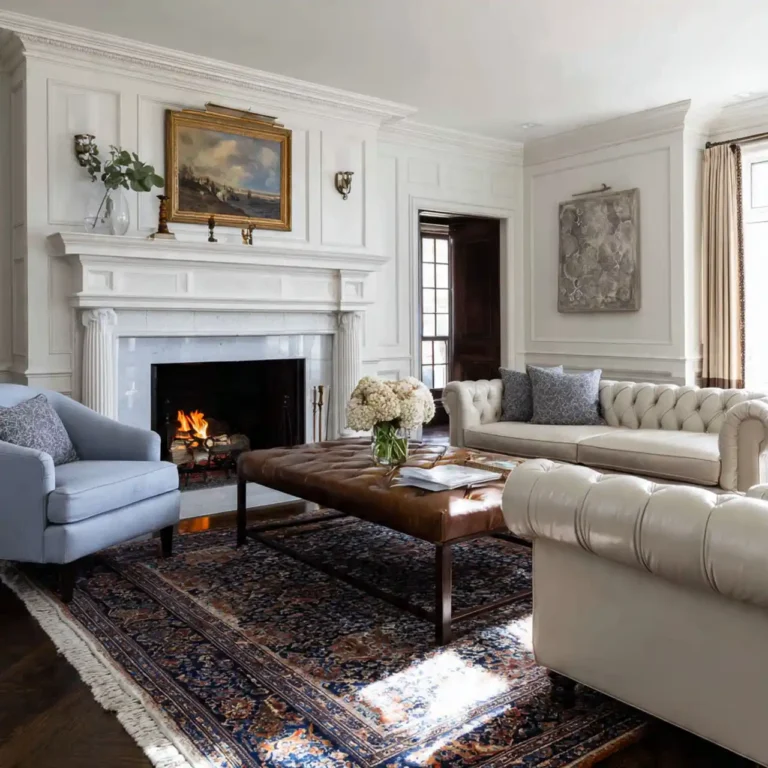
Let the fireplace be your anchor and natural room divider. Among the most organic room divider ideas, the hearth already defines the living area — arrange your seating around it, and the rest of the room naturally becomes something else. You’ll appreciate how the fire draws people to it, how the mantel creates a focal point, and how the whole arrangement makes the room feel both centered and expansive, like a campsite that’s also a universe.
For these room divider ideas, float your sofa facing the fireplace, and place a console table behind the sofa. On the other side of the console, create a dining area or home office. The fireplace zone is living; the backside zone is something else. The division feels natural because it’s built around an existing architectural feature — you’re not adding a divider, you’re just honoring the one that’s already there.
18. Dining Room Table & Chairs With Plants & Wall – Green Backdrop
Place a wall-mounted or freestanding trellis behind your dining table, covered in climbing plants. Among the most living room divider ideas, this green screen separates the dining area from the rest of the room without blocking light. You’ll love how the vines grow over time, how the green adds life to meals, and how the trellis becomes a living painting — a wall that grows, a divider that deepens its roots, like a hedge that learns your name.
For these room divider ideas, choose a fast-growing vine like pothos or ivy. Train it up a simple wooden lattice. The trellis itself is inexpensive; the impact is priceless. Your dining area feels like an outdoor cafe, even on a Tuesday night. The division is soft, green, and constantly changing — a boundary that’s also a breath, a wall that’s also a garden.
19. Living Room With Lots of Plants on Top – High Greenery
Install a shelf high on the wall, just below the ceiling, and fill it with trailing plants. Among the most unexpected room divider ideas, this green curtain hangs down, creating a soft screen without taking up floor space. You’ll love how the plants cascade like a living chandelier, how the green filters the light, and how the whole room feels like a greenhouse — a greenhouse that also happens to be a living room, like a treehouse for grown-ups.
For these room divider ideas, choose plants that trail (pothos, string of pearls, philodendron). Install a sturdy shelf with a lip to keep pots secure. Water carefully (remove pots to water, then replace). The hanging green will create a visual divider between zones, especially if you run the shelf over the edge of the seating area. It’s separation from above — a canopy that divides as it delights, like clouds that separate earth from sky.
20. Living & Dining Area With Wooden Slats – Continuous Rhythm
Run a series of vertical wood slats from floor to ceiling across the entire back wall, then continue them as a room divider. Among the most architectural room divider ideas, this approach makes the divider feel like part of the building, not an addition. You’ll appreciate the rhythm of the slats, how they create texture and warmth, and how the visual continuity makes the room feel larger — a wall that’s also a divider, like a river that’s also a road.
For a high-end version of these room divider ideas, hire a carpenter to install floor-to-ceiling slats across the entire back wall, with a break where the divider extends into the room. The effect is stunning — the room is divided, but the material is unified. It’s a sophisticated solution for open lofts and modern homes, a boundary that’s also a design statement, like a sentence with a pause that makes it poetry.
🌄 The Open-Concept Compass: 6 Essential Rules for Room Divider Ideas That Actually Work
- 📏 Keep Sightlines & Light Flow – Never Block the Windows: The best room divider ideas maintain a visual connection between zones. If you can’t see from one side to the other, you’ve built a wall, not a divider. Use open shelving, slatted screens, or plants that allow light to pass through. Your room should feel like a conversation, not a series of locked rooms — the divider should whisper “this is different” not scream “you can’t come here.”
- 🪴 Use Plants as Living, Breathing Boundaries: Among the most forgiving room divider ideas, plants soften every edge and clean your air. A row of tall potted plants creates a green wall that grows more beautiful with time. They’re also movable — rearrange as your needs change. And unlike drywall, plants reward neglect with more interesting shapes; a slightly leggy fiddle-leaf fig is a character, not a flaw.
- 📚 Make Your Divider Work Twice as Hard: A bookshelf divides and stores. A plant stand divides and purifies. A slatted screen divides and filters light. The most successful room divider ideas serve at least two functions. Never waste an opportunity — if you’re going to put something in the middle of the room, let it earn its square footage. A divider that only divides is a missed chance; a divider that also holds your cookbooks is a hero.
- 🧺 Keep Mobility in Mind – Casters Are Your Friend: Unless you’re building a permanent wall, put your room divider ideas on wheels. Casters let you reconfigure for parties, movie nights, or when you just want a change. A divider that can’t move is a commitment; a divider on wheels is an option. And in an open-concept home, options are everything — the ability to open up the space in ten seconds is a superpower.
- 🎨 Match the Divider to Your Room’s Mood: Minimalist room? Use a single large plant or a white slatted screen. Bohemian room? Macrame hanging or a rattan folding screen. Industrial? Metal mesh or pipe shelving. Your room divider ideas should feel like they belong, not like they landed from another planet. The divider is part of the room’s vocabulary — make sure it speaks the same language as your sofa and your art.
- 🌬️ Test Before You Build – Use Tape & Cardboard: Before you buy or build any room divider ideas, mock it up. Use painter’s tape on the floor to mark the footprint. Tape cardboard to the ceiling to simulate height. Live with the mock-up for a few days. Walk around it, through it, past it. Adjust. Only then, commit. This test saves you from expensive mistakes and reveals the perfect placement — the spot where the divider feels inevitable, like a tree that grew exactly where it was meant to be.
Frequently Asked Questions
Q: What’s the cheapest room divider idea that still looks good?
Ans: A curtain rod with heavy drapes. Among the most budget-friendly room divider ideas, a ceiling-mounted curtain track or tension rod costs under $50. Choose fabric that matches your decor — linen, velvet, or even a cotton drop cloth. When open, the curtains stack at one end; when closed, they create a soft, textile wall. You can also use a room divider screen made of cardboard wrapped in fabric, or a row of tall cardboard boxes spray-painted and stacked. But the curtain is elegant, easy, and surprisingly effective — a whisper of fabric that says “private” without shouting “budget.”
Q: How do I divide a studio apartment without losing natural light?
Ans: Use open room divider ideas that filter rather than block. Slatted wood screens, glass blocks, open shelving, or a row of tall plants all allow light to pass through while creating visual separation. Avoid solid walls or opaque curtains. The goal is to create the feeling of separate rooms without actually blocking the sun — your studio should feel like a series of overlapping spaces, not a cave with a bed. Position the divider perpendicular to the windows so light flows around it, not over it.
Q: Can I use a room divider in a rental without damaging walls?
Ans: Absolutely. The best room divider ideas for rentals are freestanding: hinged screens, bookshelves (anchored to the floor with felt pads), tension rod curtains, or large plants in pots. Avoid anything that requires drilling into walls or ceilings. Use removable adhesive hooks for lightweight dividers like macrame hangings. A tension rod (shower curtain style) requires no screws and can hold a lightweight curtain. Your landlord will never know, and you’ll have a divided room — a win for your deposit and your sanity.
Q: What’s the best room divider for a home office in a shared living space?
Ans: A tall bookshelf or a slatted wood screen. Among the most effective room divider ideas for work-from-home life, these options block the view of your screen while still allowing light and conversation. Add a few plants on top of the bookshelf to soften the line. The goal is to create a psychological boundary — when you’re at your desk, you’re at work; when you step around the divider, you’re home. The divider cues your brain to switch modes, like a door you walk through even though it’s just a shelf.
Q: How do I divide an open kitchen and living room without making the space feel smaller?
Ans: Use a low divider that defines zones without blocking sightlines. Among the cleverest room divider ideas for kitchen-living combos, a waist-high console table behind the sofa or a low bookshelf (under 42 inches) lets you see over it while clearly separating the two areas. Place tall plants at the ends of the divider for vertical interest. The key is to keep the line of sight open from seated height — you should be able to see from the kitchen sink to the living room window, even with the divider in place. Low means open; open means spacious; spacious means happy.
Conclusion
You’ve walked through twenty-one ways to carve space from openness — from slatted wood screens and double-sided bookshelves to rolling plant walls and hanging green curtains. Each of these room divider ideas whispered the same truth: a home doesn’t need walls to have rooms. It needs intention, a little creativity, and maybe a few tall plants. The best divisions are the ones that feel like suggestions, not sentences — a sofa floating in the middle of the room, a shelf full of books that faces two ways, a folding screen that you can open or close like a flower greeting the sun.
So look at your open floor plan with fresh eyes. Where could a screen live? Where could a shelf stand? Where could a row of plants grow tall enough to separate your sleeping from your working, your lounging from your dining? Your room divider ideas don’t need to be permanent or expensive. They just need to work for you — to give you privacy when you need it, openness when you crave it, and a sense that your home is adaptable, alive, and always changing. Go ahead. Move that sofa. Buy that screen. Grow that hedge. Your open floor plan is waiting to become a collection of cozy rooms — and you already know exactly where to put the first divider.